The Era of Personal Software Is Here
Tim Potter
Designer, maker and co-founder of Little Thunder
Software is becoming something you describe to your AI provider of choice rather than something you subscribe to. A look at what that does to SaaS, and why APIs and data start to matter more than the app, and why the operating system might be next.
I recently built a tool called Locals.
It sits in my menu bar and tells me which localhost sites I have running on my machine. It also lets me open any of them on my phone, a tablet or another laptop with a quick scan, so I can test on a real device.
It is by no means an original idea. I could have spent the time looking for an app that does the same job, and I am sure one exists.
But this one is tailored to exactly how I work. Security mattered to me too, and because the tool is mine, I got to decide how that was handled. Nothing leaves my network unless I choose to share it, and nothing is exposed to the internet.
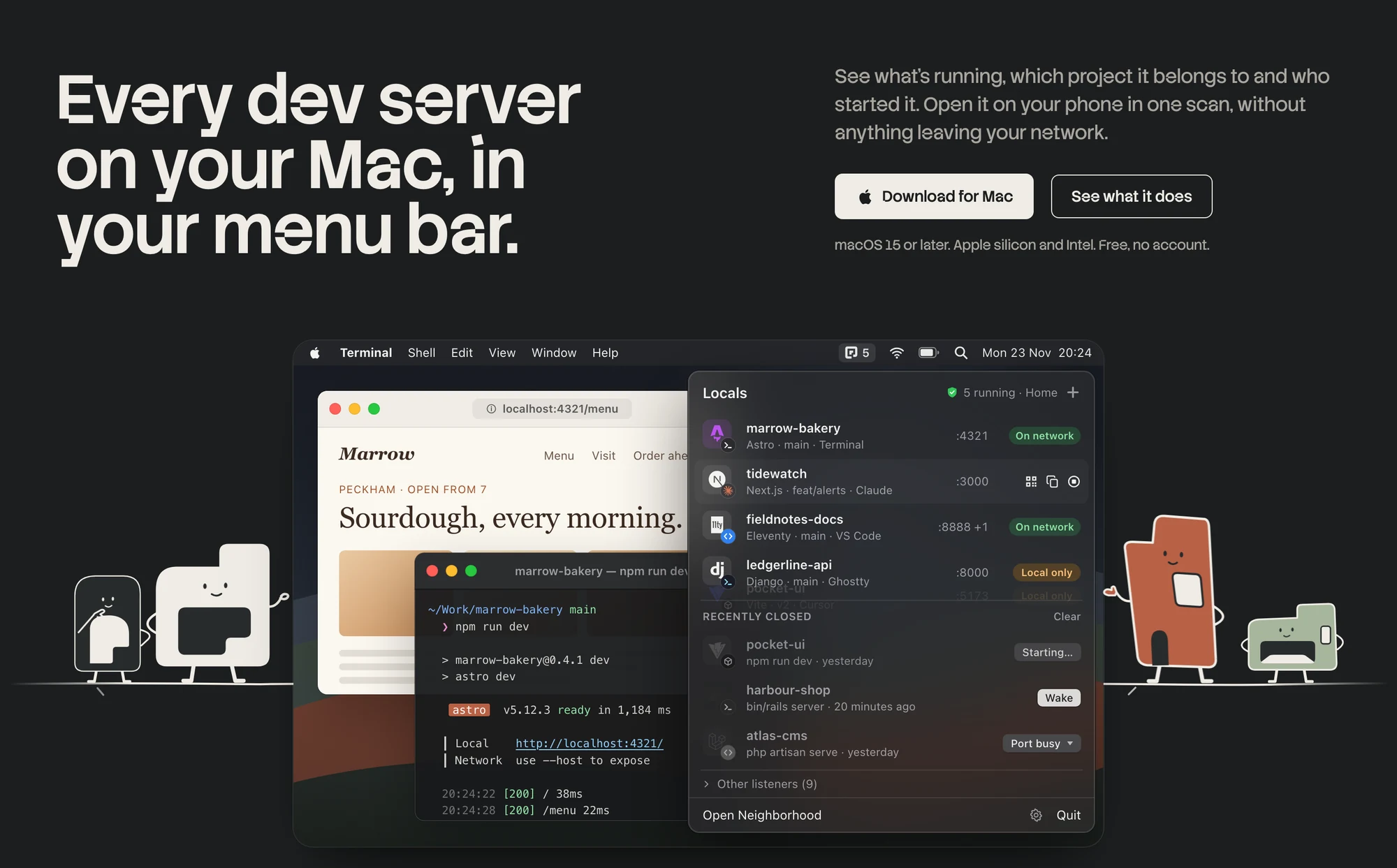
I did not go shopping for software. I described what I needed and ended up with something that fits.
I have since released it as a free Mac app at localsformac.com, in case it fits anyone else. That was an afterthought. I built it for me.
I think a lot of software is about to work this way: something you speak into existence, through whichever AI provider you already use.
Software You Speak Into Existence
Locals is a small utility. Riff is a bigger example.
Riff is a DAW I built for myself. It is a recording studio for one person and one genre: mine. It is set up around the plugins I use and the sound I am after, with a handful of mastering modes tuned to the style of music I am into.
The problem it solves is speed. When I have an idea, I want to get it down before it goes. Opening Logic Pro and setting up a session from scratch feels like a chore, and by the time everything is ready, the idea has often lost its shine.
So I wanted something I could open and be recording in straight away.
Logic Pro is great, and Riff was never meant to replace it. What Riff does is strip away the features I will never use, and there are a lot of those. It also came together very quickly.
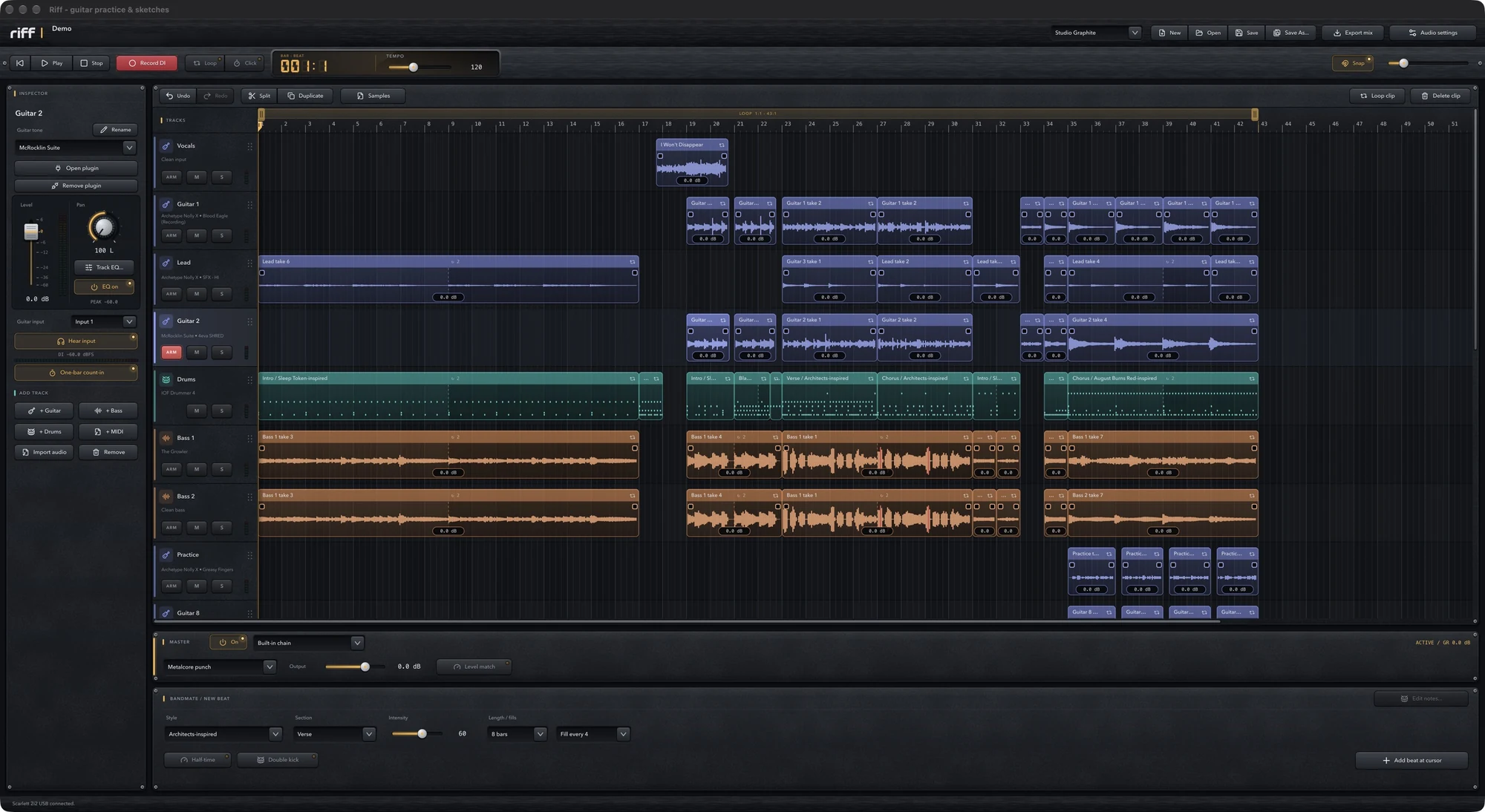
I did not set out to make a product with either of them. Each was built for a market of one. Locals only went out into the world because, once it existed, sharing it cost me almost nothing.
That is what I mean by personal software. It is built for one person and shaped around how they actually work. It is described rather than bought.
There is no app store involved, no signup and no onboarding. You say what you want to the assistant you already have open, and you keep saying it until the thing is right.
I think most people will settle on one assistant and bring everything to it, in the same way they settled on a phone. Which one matters less than the habit. Once the habit is there, “is there an app for that?” stops being the first question. The first question becomes “can I just ask for it?”
This week that got a lot more literal. Anthropic launched Install as app, a beta that turns a Claude artifact (the small tools Claude builds for you in a conversation) into a Mac or Windows app with its own icon and its own window. The app can use Claude and the services you have connected to it, and it updates when you change the artifact. It can also ask for more: notifications, keyboard shortcuts, a place in the menu bar, and, if you allow it, full access to your computer.
That removes the last bit of friction. You describe a tool in a conversation, and it ends up in your Dock next to the software you paid for.
We have been promised this before. Spreadsheets, no-code builders and automation tools all let people make their own software, up to a point. But each of them still asked you to learn the tool’s idea of your problem first. I wrote about the same thing in Using AI as a CMS: the shift is that you start from the outcome and describe it in your own words.
Describing It Is the Easy Part
Getting a working version of Locals or Riff was quick. Getting them to feel right took far longer.
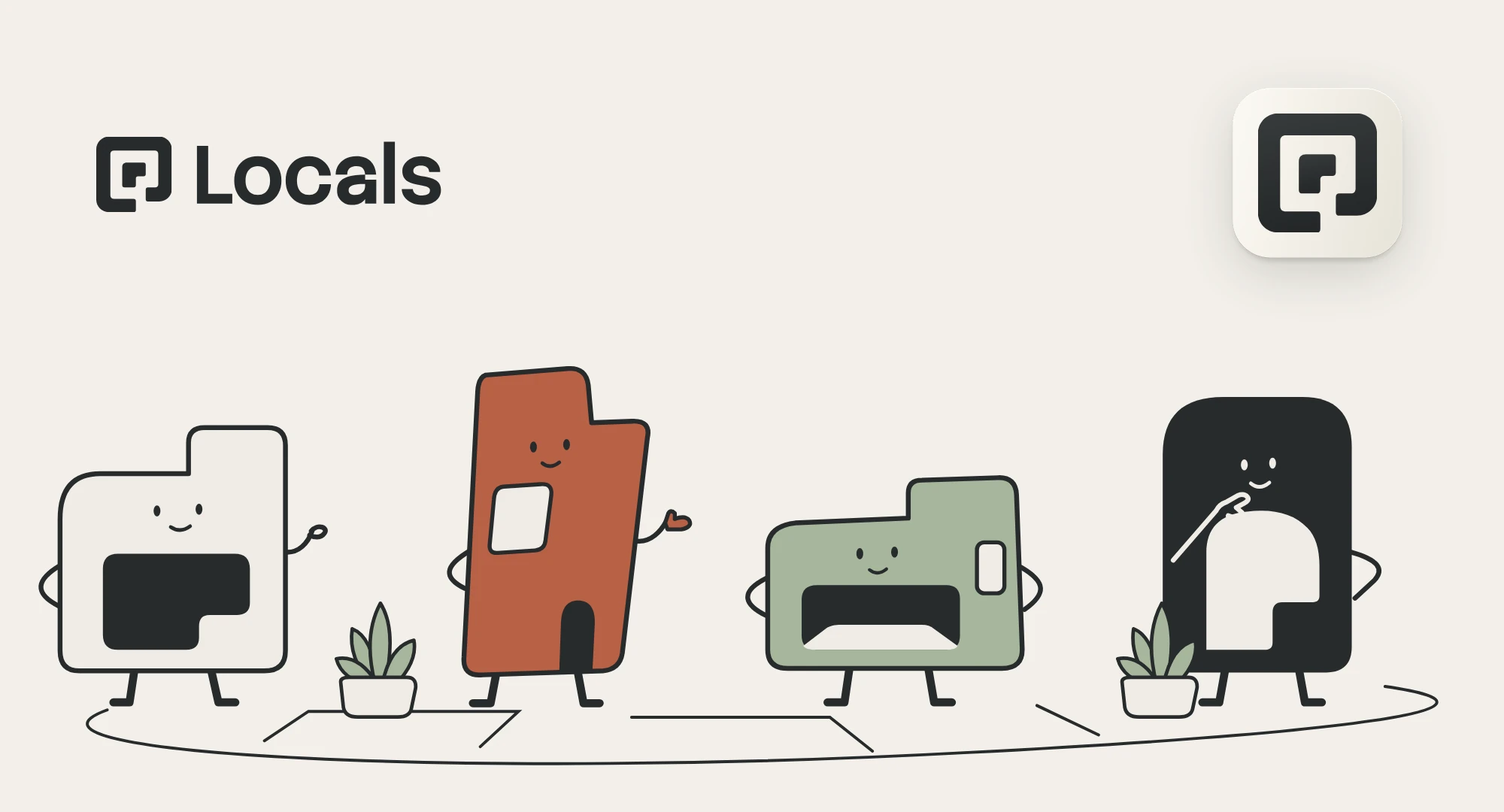
I spent a lot of time refining the UX and UI of software I had built for myself. With Locals I went further and did a whole sprint on the branding, creating the logo and a set of characters to go with it.
For me, that is what lifted it from a generic piece of software into something with design, a good experience and a personality.
Riff got the same treatment. It has five themes, from a quiet graphite studio to a Hair Metal ‘86 look that is exactly as subtle as it sounds. No one asked for them. They are there because it is my studio, and I wanted it to feel like one.
I think this matters for the whole argument. If anyone can describe a tool and get a working one back, then working is the baseline, and everyone’s baseline looks much the same. The care that goes in afterwards is what makes a tool feel like yours, and that still takes a designer’s eye and a designer’s time.
I made a similar case about design tools in Claude Design, Google Stitch and why design is most certainly “not cooked”. The baseline keeps rising, and taste counts for more each time it does.
The Same Thing at Studio Size
Personal does not have to mean one person.
At Little Thunder we have started doing the same thing for the studio. We built our own tool for finding leads, specific to our region and to the skills we actually have. A general lead tool knows nothing about either of those things, and they are the only two things that matter to us.
We also built our own CRM, which runs locally. A CRM is about as classic a subscription as there is, and most of them are built for sales teams far bigger than ours. Ours does what we need and nothing else.
Then there are the agents. We have them set up to keep an eye on our finances, our email, our calendars and incoming customer support requests. None of that is a product we bought. It is a set of instructions, pointed at the services we already use.
That last part is the bit worth holding on to. Every one of those agents is only as useful as the access it has to the underlying service.
What Happens to SaaS
A software subscription has mostly been selling one thing: a single interface and a single workflow, designed for the average customer, with a settings page to bend it a little.
Riff exists because I am not the average customer of a DAW. Nobody is the average customer of anything.
So if an interface can be made on demand, for one person, what is left to charge for?
For some products, not much. Thin layers over data you could get elsewhere look exposed. So do single-feature tools, and anything where the interface is the whole product.
Others are in a much stronger position. Anything that carries compliance. Anything where many people share the same state and need to agree on it. Anything with a network, with hard-won data of its own, or with real-world operations behind it. I can describe a recording studio into existence. I cannot describe a payments licence or a logistics fleet.
In Your Product Is Their Feature I wrote about platforms absorbing whole products as features. This is the next step along the same road. This time it is the customer doing the absorbing.
Pricing will have to move too. Charging per seat makes less sense when the thing using your product is an assistant acting on someone’s behalf. Charging for access and for usage starts to look more natural.
APIs and Data Become the Product
If anyone can make the front end, the value sits in what the front end connects to.
Most personal software is not really new functionality. It is joining things up. Your calendar, your bank, your training log and your accounts package, combined in a way that suits you and that no single vendor would ever ship. The agents watching our finances, inboxes and support queue at Little Thunder are exactly this.
That changes which companies matter. The ones that do well will have a good API, clean data and sensible permissions. Their own app becomes one client among many, and perhaps not the most used one.
It also changes what a good API is. It needs to be documented well enough for a machine to read. Access needs to be scoped, so that you can grant a little without granting everything. Pricing needs to be predictable. And you need to be able to get your own data out.
The shared standards for plugging assistants into services are still young, but they are arriving quickly, and they are the plumbing all of this depends on.
There is an uncomfortable flip side. Plenty of companies depend on keeping you inside their interface, because that is where the adverts, the upsells and the habit live. They have every reason to close the door. I expect a long fight over access, and I expect the companies that open up to be the ones people build their personal software around.
What Still Needs Solving
Quite a lot.
Trust is the first one. If I describe a tool and get one back, who checks that it does what I think it does? That matters little for a list of localhost sites. It matters a great deal for anything touching money or health.
Maintenance is the second. Personal software still breaks when a service it relies on changes. With a product, that is somebody else’s problem. With your own tool, it is yours, and you might not notice until the day you need it.
Then there is security. Handing an assistant the keys to five different services is a bigger ask than installing one app. I was careful with Locals because I knew to be. Not everyone will know what to ask for.
Lock-in does not disappear either. It moves. If everything you have made lives with one provider, that provider is your new platform, with all the power that comes with it.
And sharing is still hard. Software for one is easy. Software for a small studio that talks every day is manageable. Software that a whole organisation depends on needs agreement, permissions and someone responsible when it goes wrong. That is where products still earn their keep.
The Next Moat Is the Operating System
Here is my hot take.
The deepest moat in software has never been an app. It has been the operating system. Apple, Google and Microsoft own the layer everything else runs on, and that is what let them absorb whole products as features in the first place.
I think that layer is next.
Look at what an operating system actually does for most people. It launches apps, keeps track of files, manages windows and asks for permission. If the apps are things you describe, and your assistant already knows your files, your calendar and your accounts, then the assistant is quietly doing the operating system’s job.
Install as app is an early look at that. Those apps sit in the Dock like any other, but they run through the Claude desktop app and your Claude account. The operating system underneath is starting to feel like a host for something else.
So here is where I think it ends up. You will have one device. It looks like a phone and works as a phone, and when you sit down at a desk it becomes your desktop computer. Whatever it runs underneath, the thing you actually use will be the AI provider you chose. Your provider will be your operating system.
That is also why the lock-in point above matters so much. Choosing an assistant today feels like choosing an app. In a few years it might feel more like choosing between a Mac and a PC.
Where This Leaves Software
For as long as I have been using computers, the app has been the unit of software. You find one, you install it, you learn it.
I think that unit is changing. What matters now is your data, the services that hold it, and whatever you decide to ask for today.
If I were building a SaaS product now, I would want it to be the best source of something, and I would make it as easy as possible to connect to. The interface I ship would be a good default, not the only way in.
Locals and Riff are not better than the products they sit beside. They were made for me first. They do what I need and nothing else, and I had forgotten that software could feel like that.