
Hard Break
Hard Break is an eight-ball pool game for the Sega Mega Drive, with seven venues, a CPU opponent and full-table physics running on a 16-bit console from the late 80s.
- Role
- Design & Code
- Year
- 2026
- Status
- In progress
What it is
Hard Break is an eight-ball pool game for the Sega Mega Drive. It started life as BREAK!, and it runs on a real console as well as in emulators.
Take on the CPU opponent on Easy, Normal or Hard. Play solo and clear the table, with or without the clock running. Or hand the second pad to a mate.
There are seven venues, each with its own neon and its own cloth: The Local, Base, Beach Club, Tokyo, Vegas, Lakeside and Pitstop.
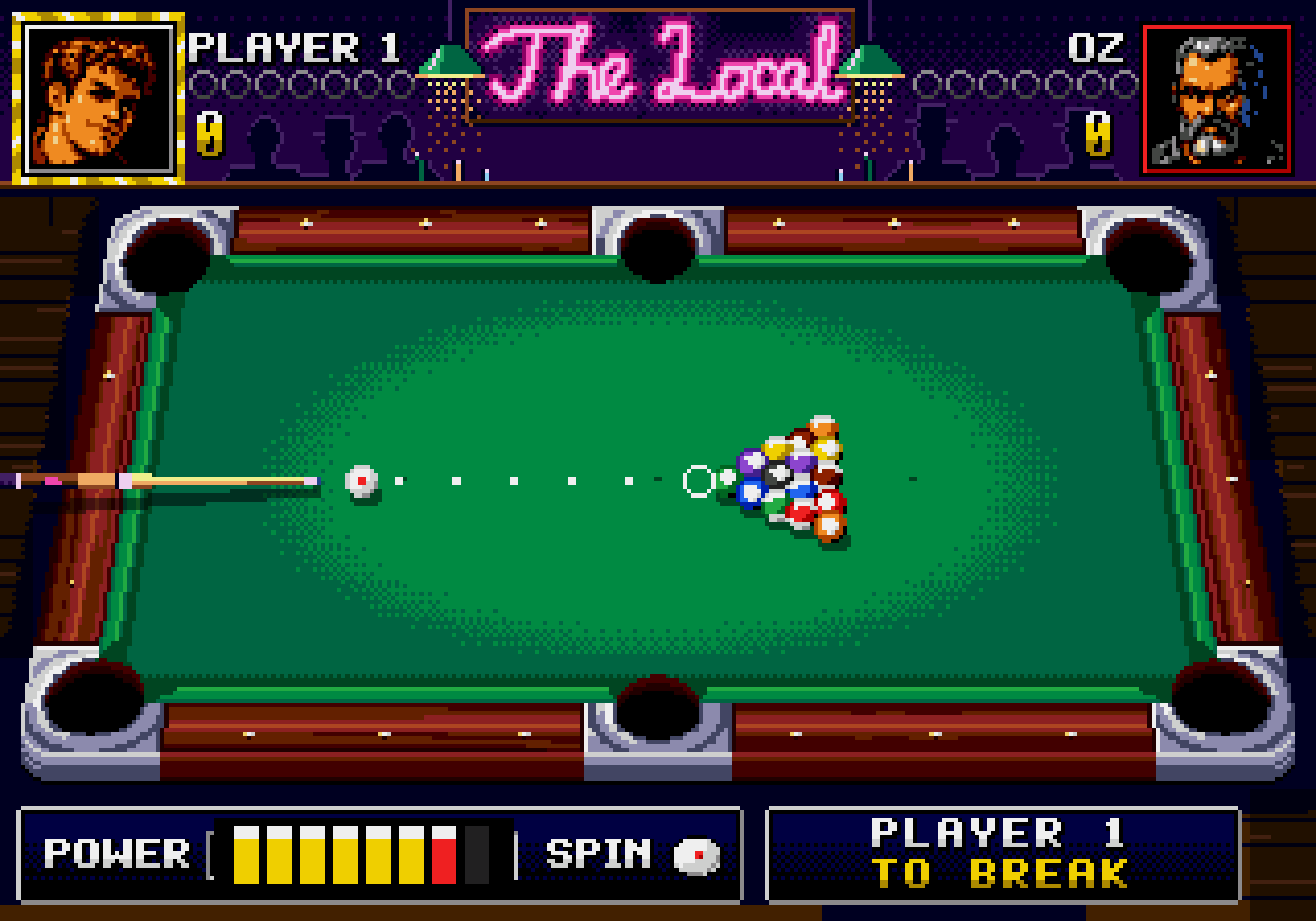
01 · THE LOCAL
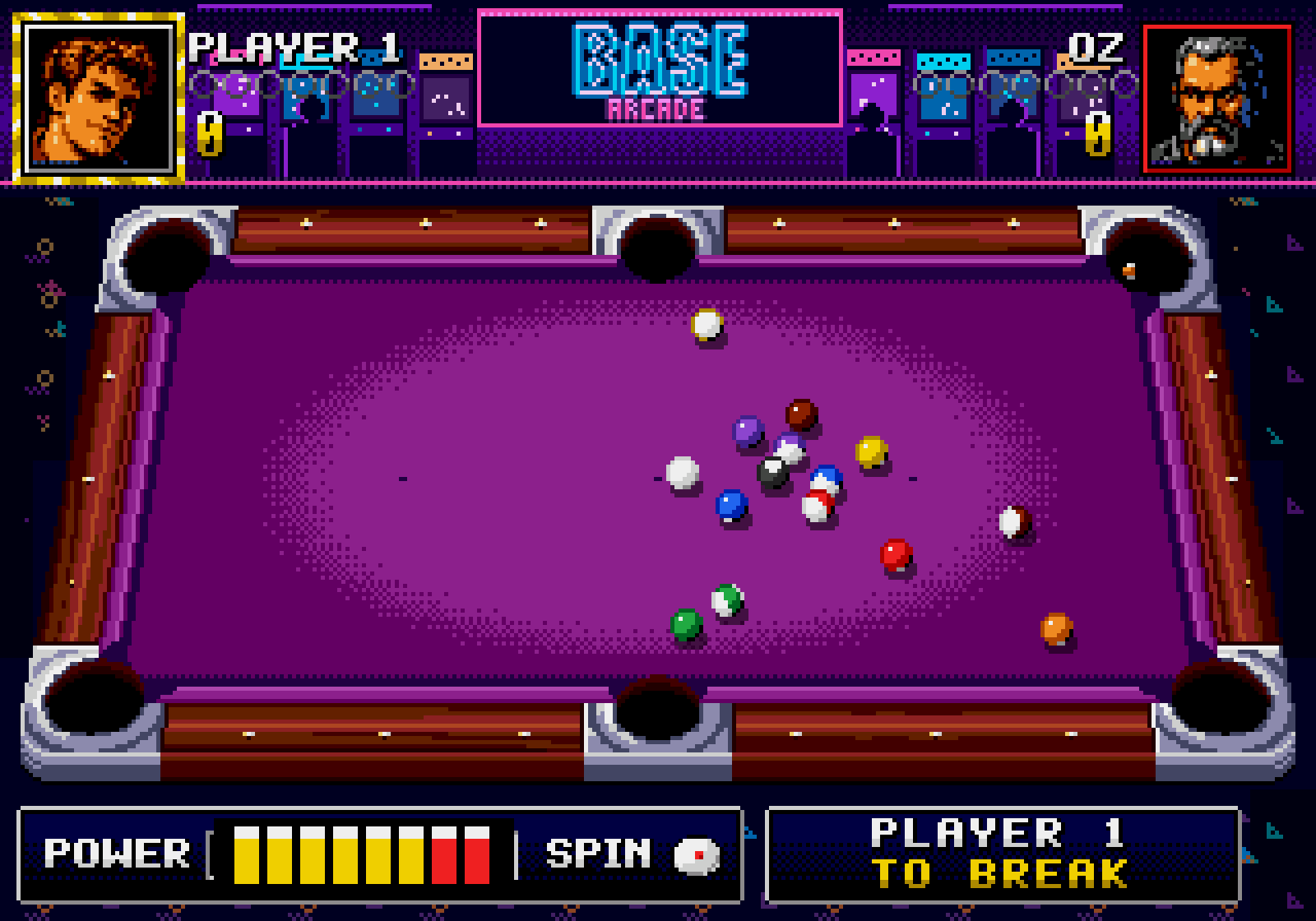
02 · BASE
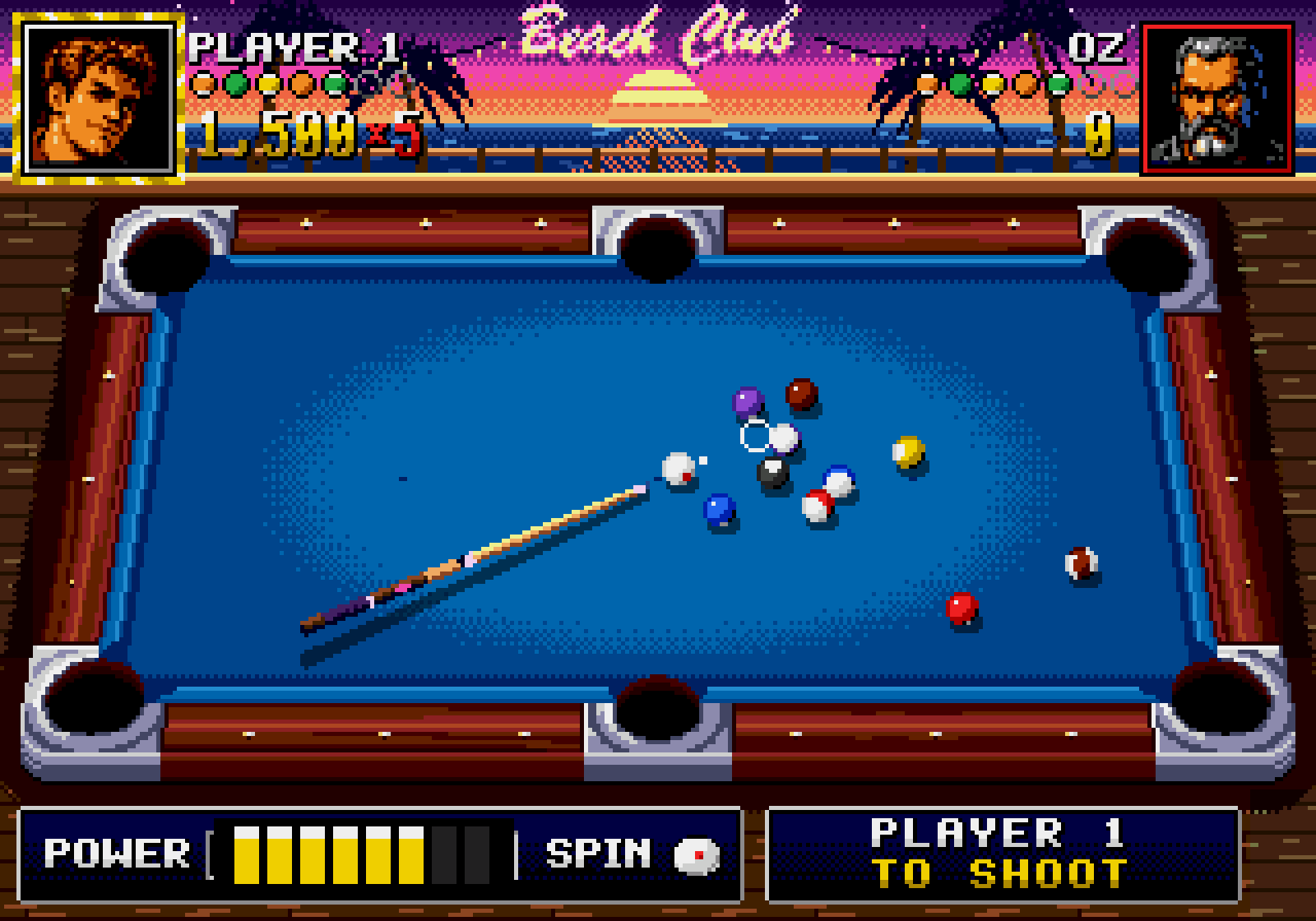
03 · BEACH CLUB
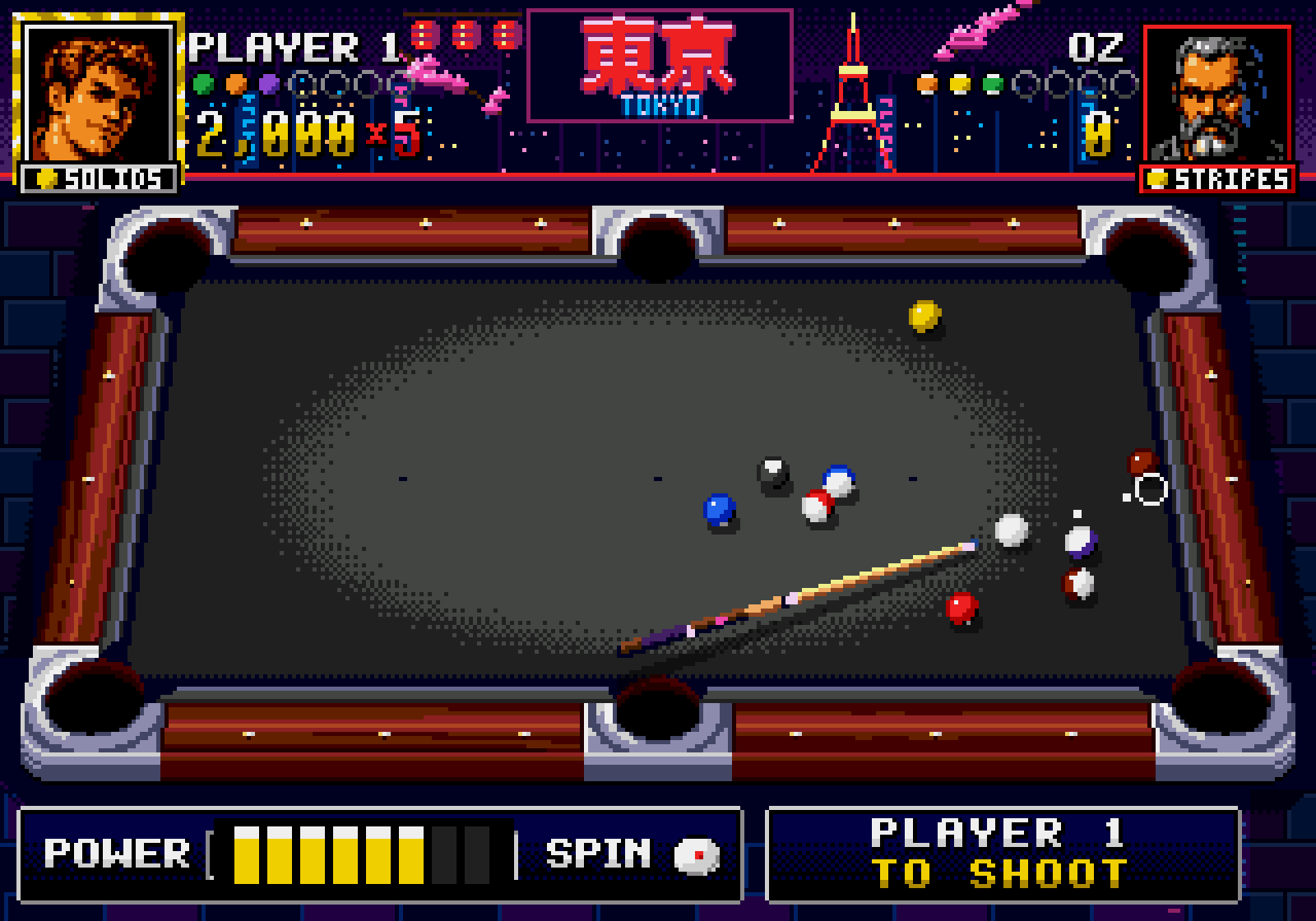
04 · TOKYO
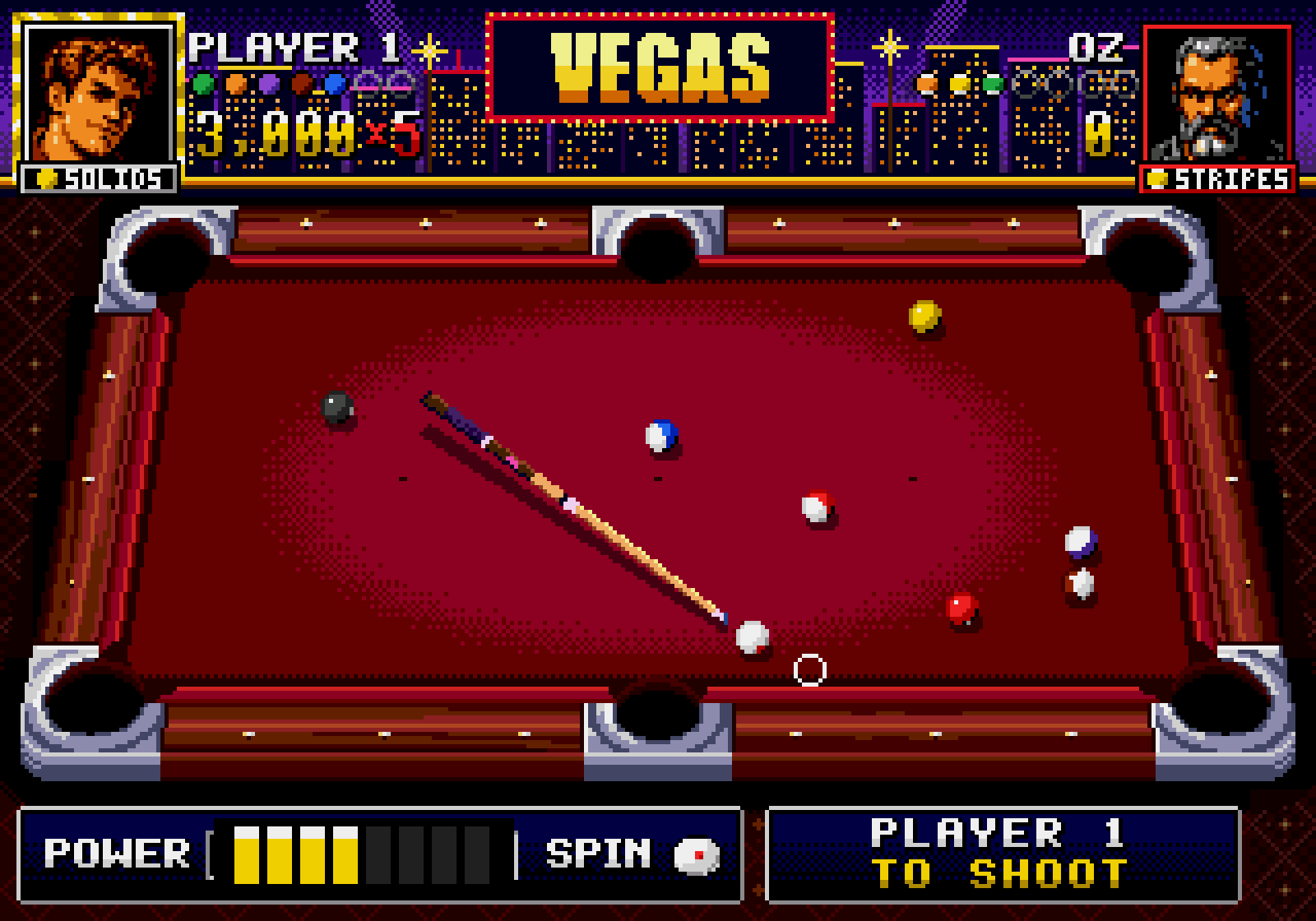
05 · VEGAS
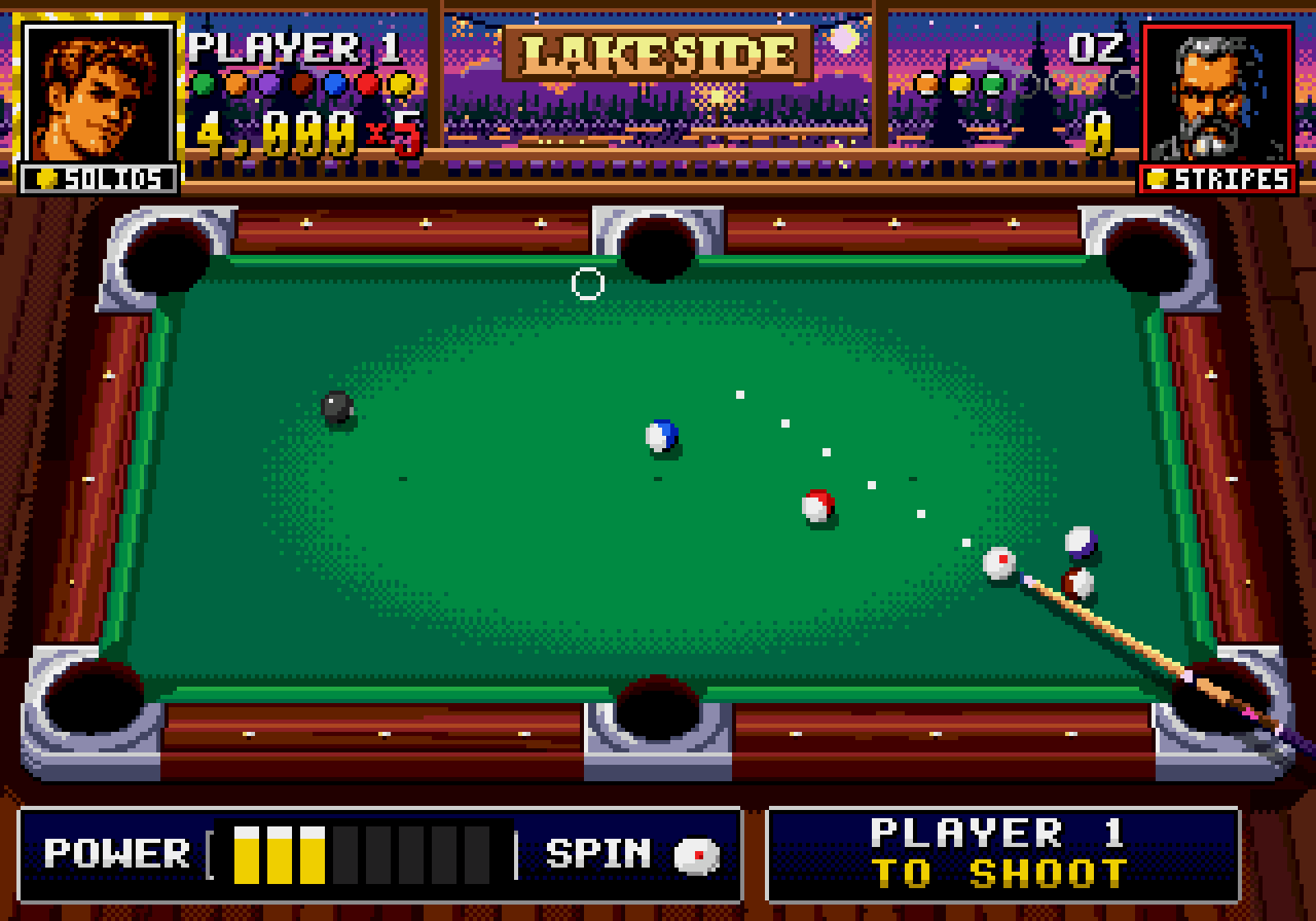
06 · LAKESIDE
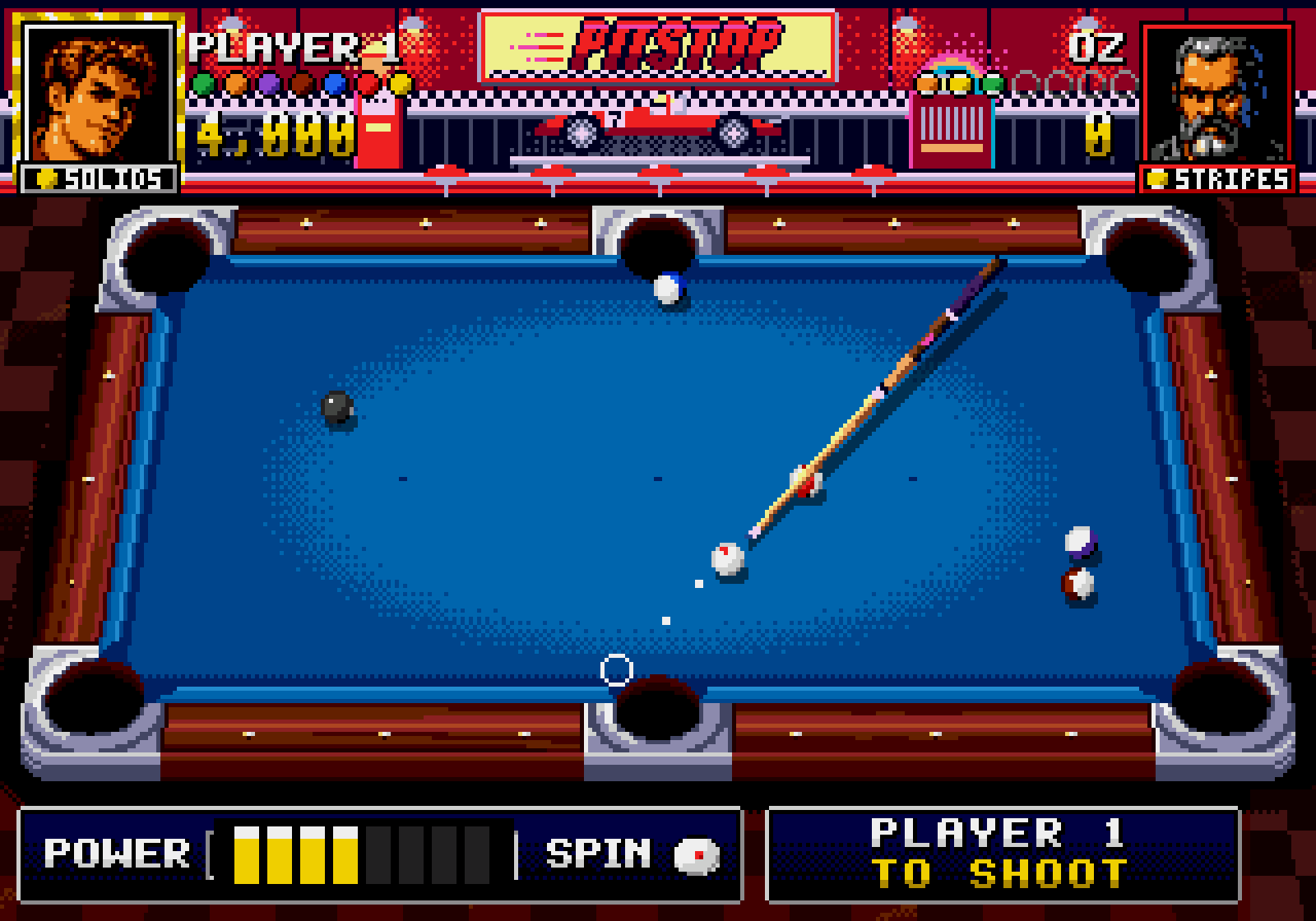
07 · PITSTOP
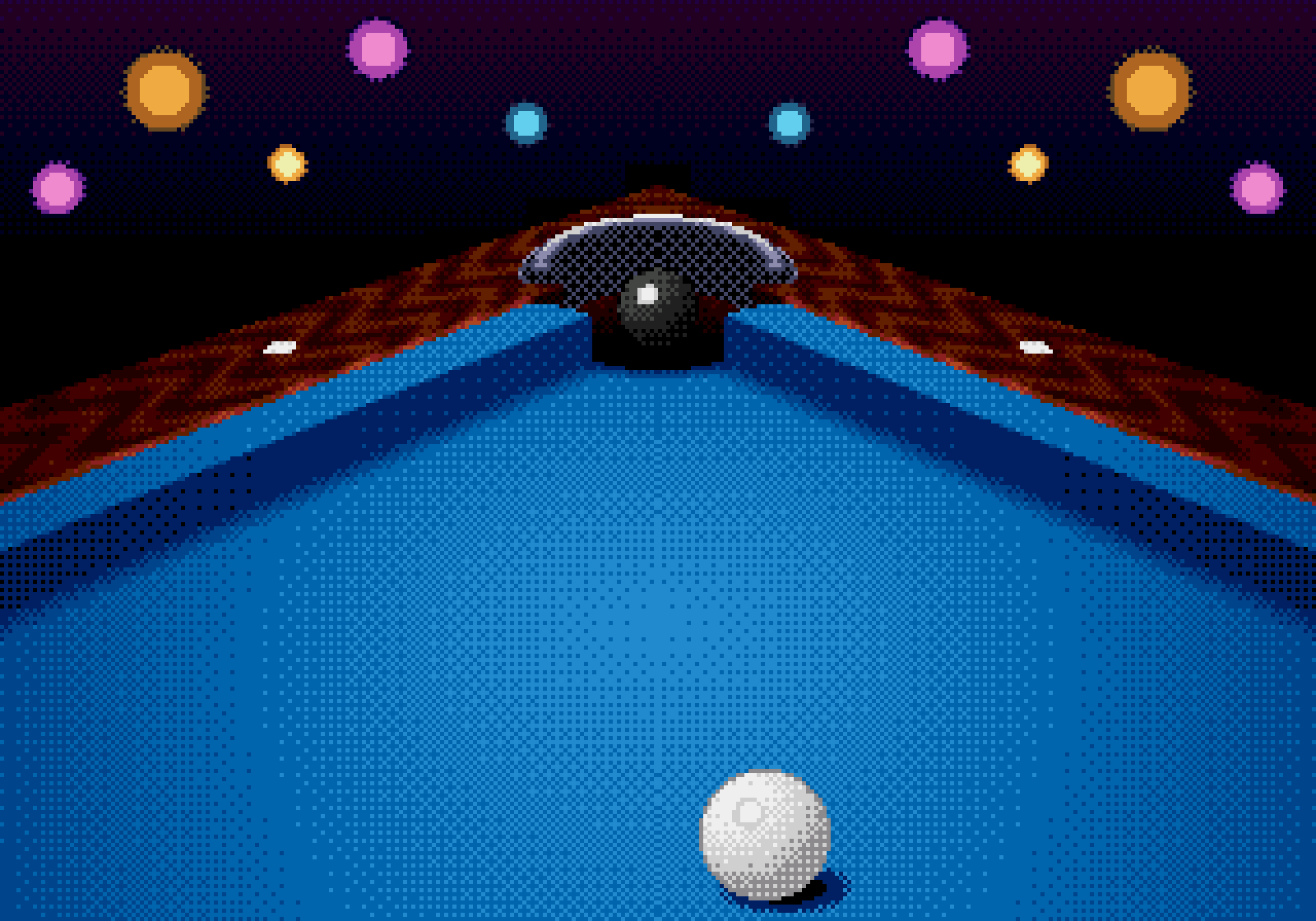
08 · THE FINAL BLACK
Why I made it
MegaWord was me being sensible: a small idea, clear rules, and no physics. Hard Break is the opposite. Fifteen balls colliding, cushions, pockets and spin, on a console that’s nearly forty years old.
How it plays
The controls are simple, but there’s a lot going on underneath.
- Aim turns in 1,024 steps to a full circle, about a third of a degree each. Tap for one step, or hold and it speeds up.
- The aim line is a stream of dots flowing from the cue ball to a ghost ball, which shows exactly where the cue ball will meet the first ball it hits. The harder the shot, the faster the dots flow.
- Power and spin. Eight levels of power, plus side, follow and draw. You can see both on the cue: it rests further back the harder you’re going to hit, and the tip moves with the spin.
- Every rack is dealt. The balls go into the triangle in a different order every game, so no two breaks play out the same.
- The CPU opponent picks the clearest shot, aims at the ghost ball, and misses the way a person does. Easy, Normal and Hard change how far off it can be.
- Points. Every ball scores, and a run of pots builds a multiplier.
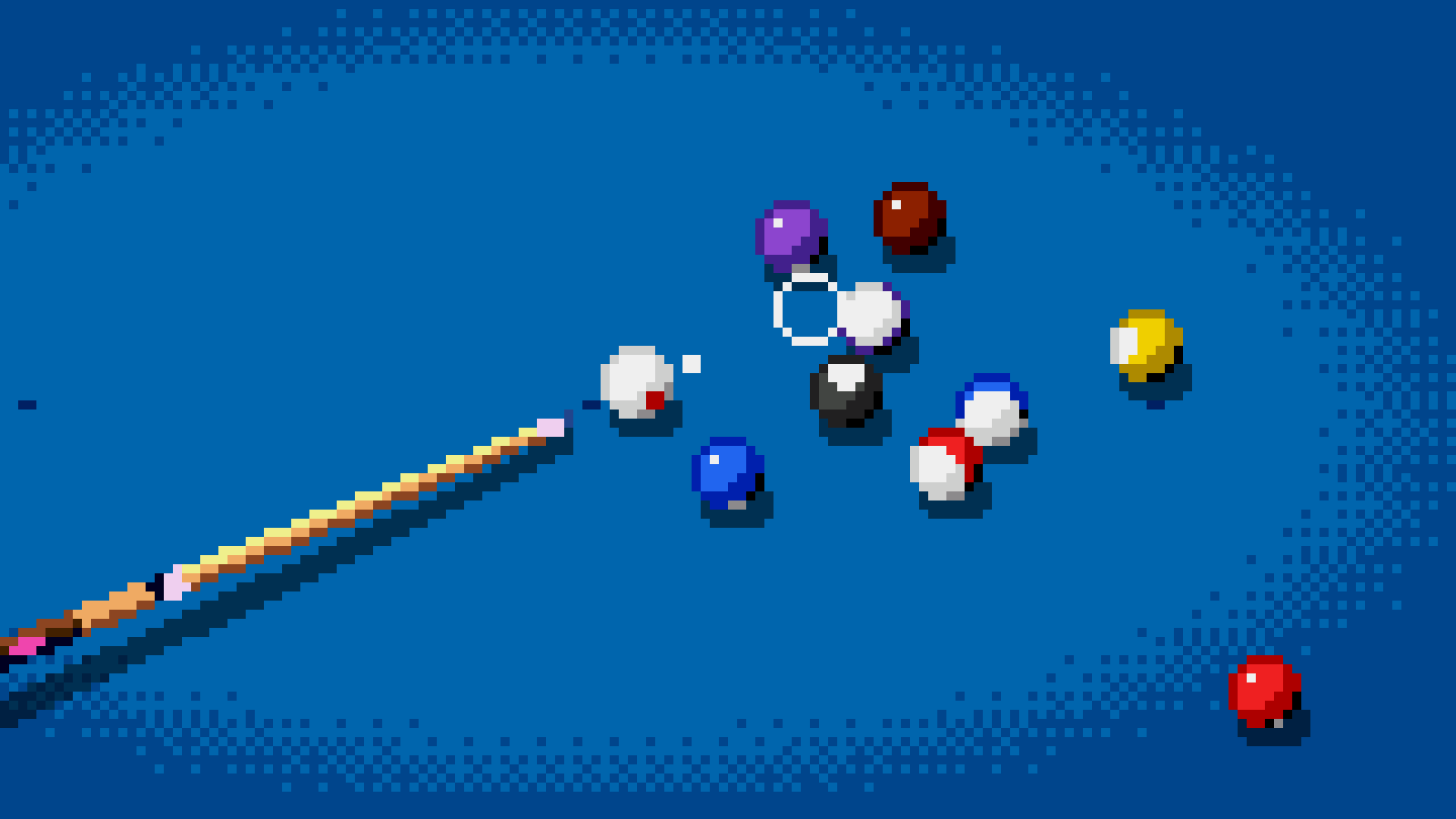
The final black
When the 8 is on its way to the pocket, the game cuts away from the table to a low pocket camera and lets you watch it roll in. Like everything else, it’s drawn with the Mega Drive’s own tiles and sprites.
Under the hood
- Written in C with SGDK for the Mega Drive’s 7.6 MHz 68000, with integer-only fixed-point physics for every collision, cushion and pocket.
- The break is the hard part. Fifteen balls moving and colliding at once is the most work the game ever does in a frame, so it schedules its physics steps around the picture to keep the break running at full speed.
- PAL and NTSC. The game plays at the same speed on 50 Hz and 60 Hz consoles.
- Tested in an emulator harness that measures each build’s frame budget and has a bot play whole matches, to check the physics comes out identical from one build to the next.
- Playtested on a real Mega Drive, not just in emulators.
What’s next
It’s still in progress. There’s a character select mocked up with a roster of new opponents, plus plenty of polish to come before it’s finished.