
Your Product Is Their Feature

Tim Potter
Designer, maker and co-founder of Little Thunder
Apple is reportedly building AI calorie tracking into the iPhone. Bad news if that's your startup. A look at Sherlocking, platform power and why value is moving from functionality to trust, community and workflow.
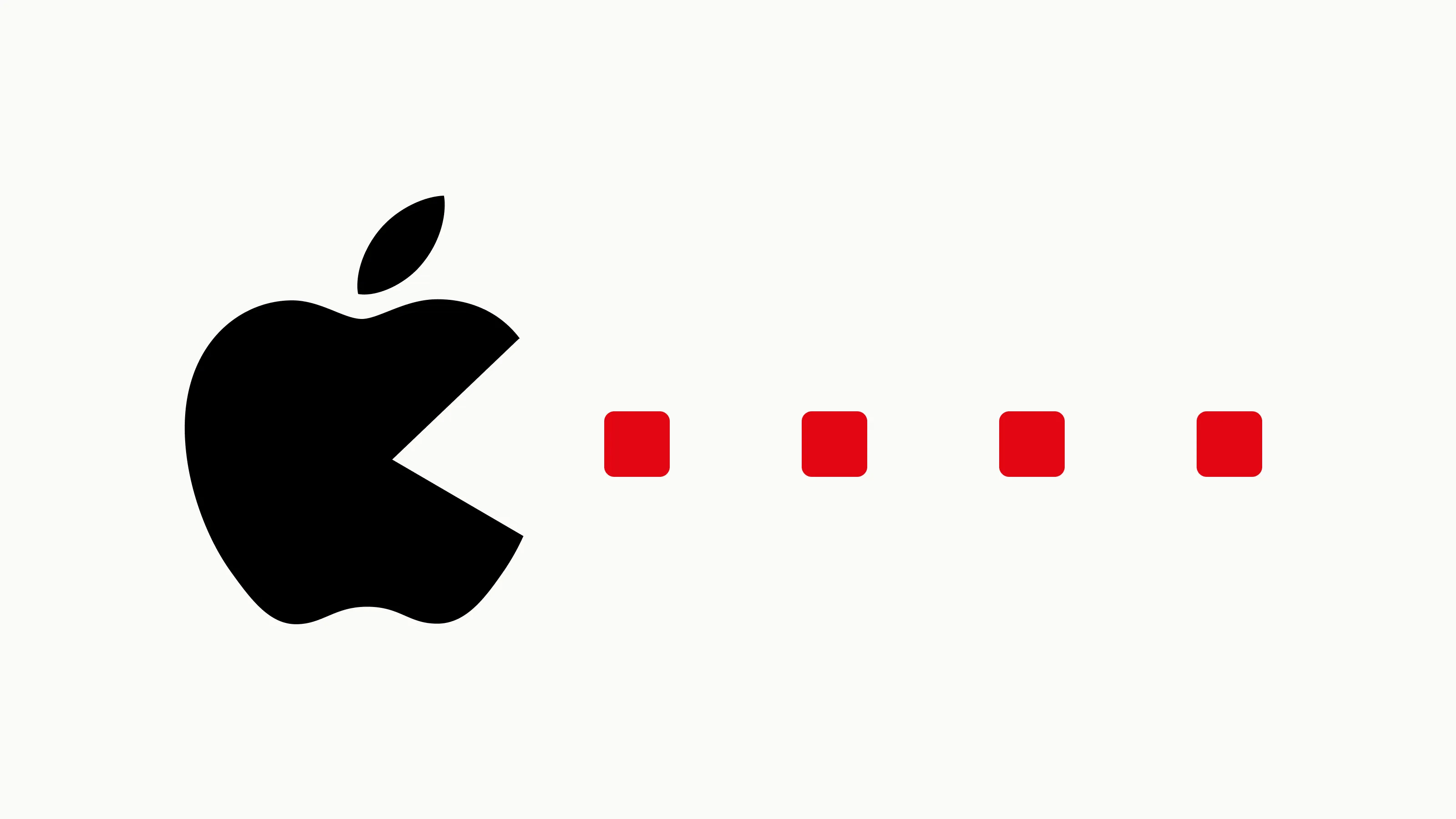
Imagine spending five years building a calorie tracking startup. You raise funding, hire a team, acquire customers and slowly carve out a place in the market. Every month is spent improving onboarding, reducing churn and convincing people that your product deserves a place on their phone. Then Apple walks on stage at WWDC and announces that calorie tracking is coming to the iPhone. Not as an app, but as a built-in feature.
Recent reports suggest Apple is exploring AI-powered nutrition tracking that could allow users to photograph meals and receive calorie and nutritional estimates directly within Apple Health. Whether the final implementation arrives exactly as rumoured is almost beside the point. The market reaction starts long before launch. Investors, founders and customers immediately begin asking the same question: why would I download a dedicated app when my phone already does most of the job?
This isn’t really a story about calorie tracking. It’s a story about where value lives in software and how quickly that is changing.
For most of the history of the software industry, products were difficult to build. Creating useful functionality required specialist knowledge, large teams and significant investment. If you managed to build something genuinely useful, there was a reasonable chance you could turn that functionality into a business. Features were often enough.
Today that assumption looks increasingly fragile. AI has dramatically reduced the cost of creating software. Image recognition, transcription, translation, writing assistance and research capabilities that once justified entire product categories are rapidly becoming commodities. The same technology that allows startups to build faster also allows platform companies to absorb functionality faster. Every breakthrough available to a two-person startup is also available to Apple, Google, Microsoft, OpenAI and Meta.
The technology itself isn’t the most important part of this story. Distribution is.
Apple doesn’t need to persuade people to install a calorie tracking app. It already sits in their pocket. The company has more than two billion active devices worldwide. When Apple adds a feature, there is no onboarding flow, no acquisition campaign and no subscription decision. The feature simply appears. A startup might have a better product, but consumers have repeatedly shown that convenience beats specialisation for the majority of use cases.
This pattern is hardly new. The software industry even has a name for it: Sherlocking. The term dates back to the early 2000s when Apple introduced new functionality into its Sherlock search tool that closely mirrored capabilities offered by a third-party application called Watson. Since then, countless software categories have experienced the same phenomenon. Password managers, flashlight apps, weather apps, screen recording tools and clipboard managers have all watched pieces of their value proposition become operating system features.
What’s different today is the speed.
Historically, platform companies absorbed product categories over the course of years. AI is compressing that timeline dramatically. Features that once required dedicated engineering teams can now be built on top of foundation models and integrated into existing products at remarkable speed. The result is that entire categories of software can begin to look vulnerable almost overnight.
We’ve already seen hints of this across the industry. Writing assistants now compete with built-in AI tools from Apple, Microsoft and Google. Meeting transcription startups compete with Zoom, Teams and Google Meet. Research tools compete with ChatGPT. Image generation products compete with capabilities embedded directly into operating systems and social platforms. Increasingly, founders are discovering that they weren’t building businesses protected by technology. They were building features that happened to exist before the platforms got around to implementing them.
That doesn’t mean startups are doomed. In fact, some of the most successful technology companies are proof of the opposite. Strava isn’t valuable because it records runs. Plenty of devices can do that. Figma isn’t valuable because it lets people draw rectangles. GitHub isn’t valuable because it stores code. These products survive because their value extends far beyond functionality. They own workflows, communities, habits and relationships. They become part of how people work rather than simply offering a feature.
That’s the shift many founders are still coming to terms with. For years, value lived inside functionality. Today, functionality is becoming easier to create and easier to copy. As a result, value is moving elsewhere. It lives in trust, community, workflow integration, proprietary data and brand. These are things that platform companies cannot absorb nearly as easily as a feature.
The danger isn’t that Apple, Google or OpenAI will copy your product. The danger is that your entire business can be reduced to a feature. Once that happens, you’re no longer competing with another startup. You’re competing with the company that owns the platform, controls the distribution and already has the customer relationship.
The calorie tracking example is simply the latest reminder. The future of software belongs to companies whose value cannot be summarised in a release note.