
AI Will Eat Itself
Tim Potter
Designer, maker and co-founder of Little Thunder
Pop Will Eat Itself took their name from the idea that culture recycles itself until it feeds on its own output. Forty years on, generative AI is learning from a web it increasingly wrote, and watermarking might be part of the way out.
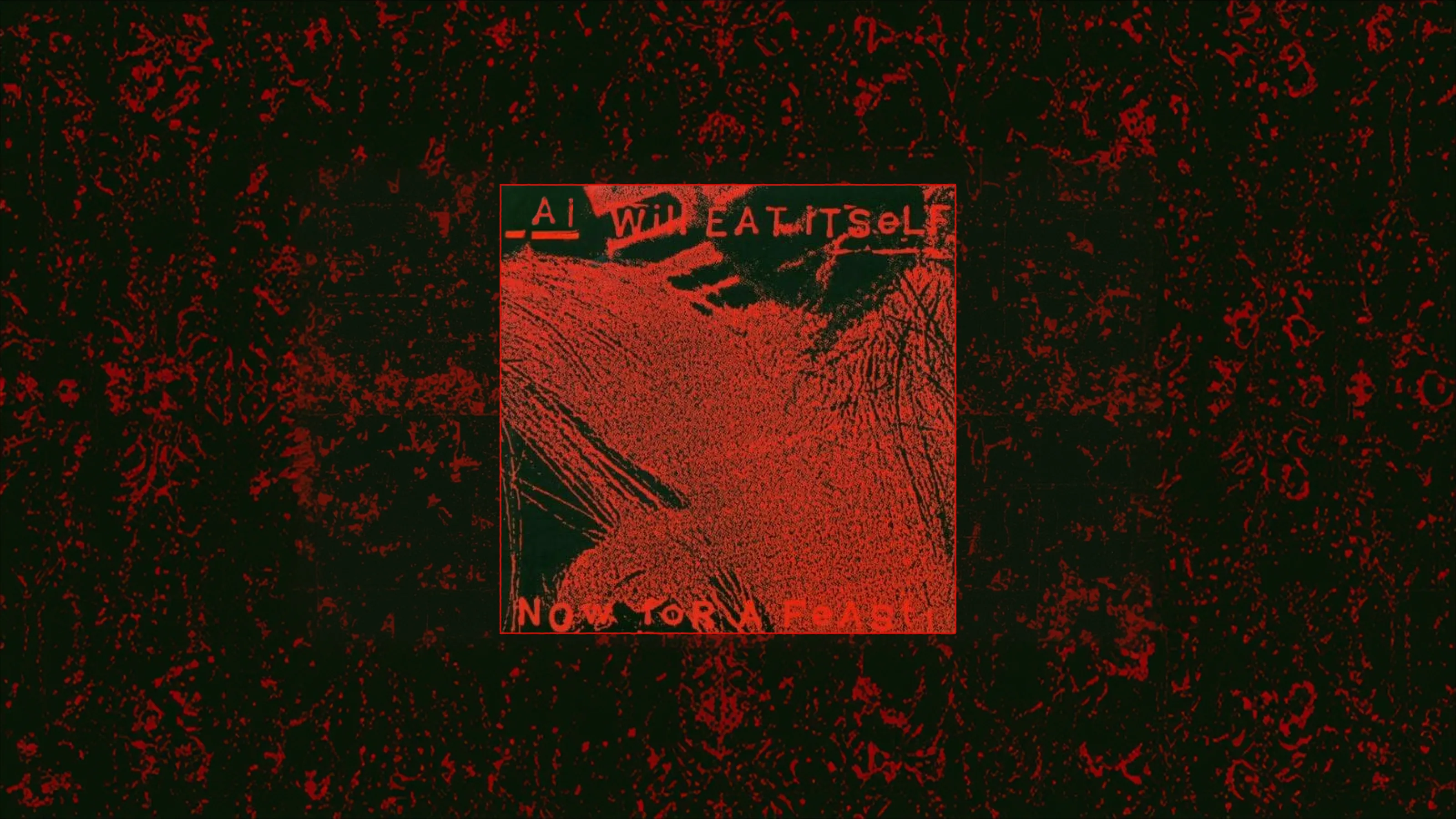
Back in 1986, an alternative rock band from the West Midlands formed under the name Pop Will Eat Itself.
The name came from the idea that popular culture recycles itself so often that it eventually starts feeding on its own output.
40 years later, AI may be heading the same way.
Generative AI learned from us. It learned to write from books, articles, websites and forums. It learned imagery from photography, illustration, painting and design. Music models learned from songs made by people.
Humans created the source material. AI learned from it.
But what happens when more of that source material is also made by AI?
A 2025 study by Ahrefs estimated that 74% of newly published webpages contained at least some AI-generated content. More recent research from Graphite puts the split of primarily AI-written and human-written online articles at almost exactly 50/50.
The figures are not exact, but the direction is clear. More of the web is being written, edited and shaped by machines.
So what does the next generation of AI train on?
An AI reads human writing and produces an article. That article is published. Another model later scrapes it, learns from it and produces another version.
The copy starts learning from the copy.
Researchers call one possible outcome model collapse. Studies have found that models repeatedly trained on generated material can begin to lose the less common details in the original data. The outputs become narrower, safer and more predictable.
That matters because the unusual bits are often where creativity lives.
AI is good at predicting what is likely to come next. Creativity often comes from doing the thing nobody expected.
You can already see some convergence. The same polished images, the same article structures, the same oversized headlines, rounded cards and dark sections.
None of it is necessarily bad. It is often very good.
It is just starting to feel strangely familiar.
Interestingly, Anthropic may have just given us part of the solution.
From August 2026, new Claude models will add invisible watermarks to generated text, with similar provenance information attached to images and files. Anthropic says this is primarily about transparency and meeting new EU rules, but it could have another useful side effect.
If future models can tell which parts of the web were generated by AI, they can choose what to do with them. Keep them, filter them out or at least avoid mistaking them for something a human created.
Perhaps the problem isn’t AI training on AI after all. Synthetic data is already deliberately used to train models.
The bigger problem might be AI training on AI without knowing it.
AI can rearrange human experience brilliantly. What it cannot do is go out and have more of it.
That may make genuinely human work more valuable, not less. People keep adding new experiences, mistakes, obsessions and points of view into the system.
Without that, creativity probably does not stop.
It just starts to eat itself.